The Bus Shelter at the End of the World: Why British Games Should Stay in the Drizzle
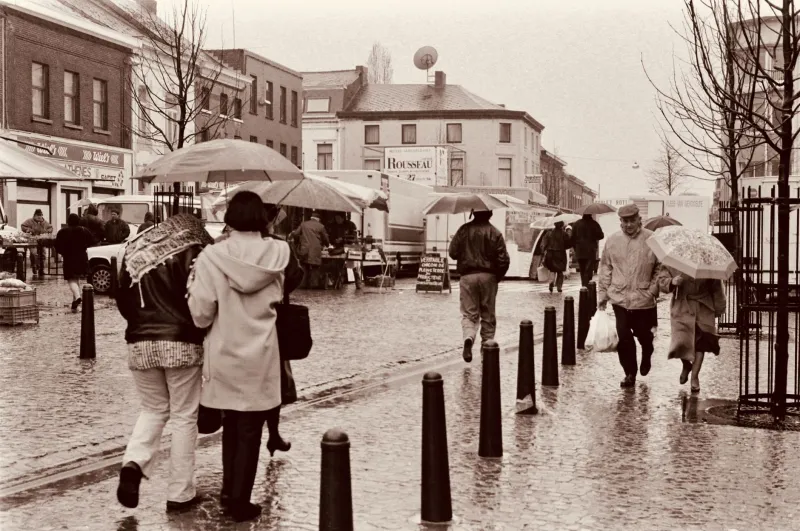
There is a specific kind of British apocalypse that games keep missing. Not the mushroom cloud over Westminster, not the zombie horde shuffling down Oxford Street, but the sight of a retail park on a Tuesday afternoon, drizzle coming in sideways, a Halfords, a Domino's and a bus shelter with one pane of glass left in it. That's the end of the world I recognise. And almost nobody is making it.
Instead, British-made games tend to reach for one of three settings: London, a fantasy realm with a lot of vowels in the place names, or an American-style wasteland where the cars are the size of bungalows. All three can be brilliant. But there's a whole country between the M25 and the mushroom cloud that games keep skipping over, and it's full of chip shops, cul-de-sacs and sky the colour of a wet flannel.
We've Got London Coming Out of Our Ears
London is shorthand for Britain in the same way that New York is shorthand for America. It's efficient, it's photogenic, and it's been done. Watch Dogs: Legion turned Camden into a playground for drones. Fallout: London did genuinely astonishing things with the Underground. But when every British game funnels its ambition into Zone 1, the result is a version of the country that most players have never actually lived in. A country of landmarks rather than bus stops.
The games that stick are the ones that get specific. Thank Goodness You're Here! is set in Barnsworth, a fictional Northern town that feels less like a location and more like a memory of one. It has a greasy spoon, a dodgy landlord and a chip shopthat should be a World Heritage Site. It works because it isn't trying to represent Britain. It's trying to represent somewhere.
The Mundane Is the Point
Ask players what they remember from a game and they rarely mention the skybox. They mention the pub they holed up in, the corner shop that became a base, the cul-de-sac where they learned to drive. Specificity is what makes a place feel real, and British mundanity is specific in ways that fantasy never quite manages.
The Magnificent Trufflepigs is a lovely example. It's a small, quiet game about metal detecting in an English village, and it understands that the stakes don't need to be cosmic. There's a village fete, awkward flirting, a field that might have been a Roman road. It's the sort of game that makes you want to put the kettle on. Everybody's Gone to the Rapture takes the same instinct and turns it into something eerie: a Shropshire village emptied out, phone boxes and pub signs doing the work that monsters usually do. Still Wakes the Deep isn't a town game, but it gets the same texture from a Scottish oil rig in the 1970s, all claustrophobia and bad weather.
These games don't treat ordinary places as a compromise. They treat them as the whole point.
What a Retail Park Gets Right
I asked a handful of UK players which game locations felt most like home, and the answers were almost never grand. A Leeds-based player told me she'd spent forty hours in a PowerWash Simulator level because it reminded her of her nan's back garden. Someone else mentioned the cul-de-sacs of The Sims, where they'd recreated their street and then flooded it, as you do. A Brighton-based developer I spoke to said the biggest hurdle isn't player appetite, it's pitching. Investors hear "market town" and see a smaller audience. They hear "London" and see a trailer.
That's the trap. British developers are being nudged towards settings that travel, and the result is a country that feels like a tourist board brochure. But the mundane is not niche. A bus station is a hub. A leisure centre is a dungeon. A cul-de-sac is a social system. A retail park at dusk, with the shutters coming down and the seagulls fighting over a discarded sausage roll, is as atmospheric as any fantasy capital.
The Games We're Not Getting
What I want is a survival horror set in a Home Bargains. A management sim about keeping a market town's high street alive. A walking sim that takes place entirely on a bypass. A crime game where the big heist is nicking the charity box from a garden centre. These aren't jokes. They're settings with built-in texture, humour and memory, and they're sitting right there.
There are signs of life. The UK indie scene is full of people making games about ordinary places, from bedroom developers to small studios in Dundee and Brighton. The appetite is there. What's missing is the confidence to believe that a wet Tuesday in a town nobody's made a postcard of can carry a game on its own.
So Let's Get Soggy
The damp apocalypse is more interesting than the dry one. It's funnier, it's sadder, and it's truer to the way most of us actually experience the country. Games don't need to keep chasing London or inventing a fantasy kingdom. They just need to look out of the window. If the sky is grey and there's a chippy on the corner, you're already standing in a setting worth playing.