Empty Shelves, Quiet Tills: What the Retreat of UK Game Retail Really Costs Players
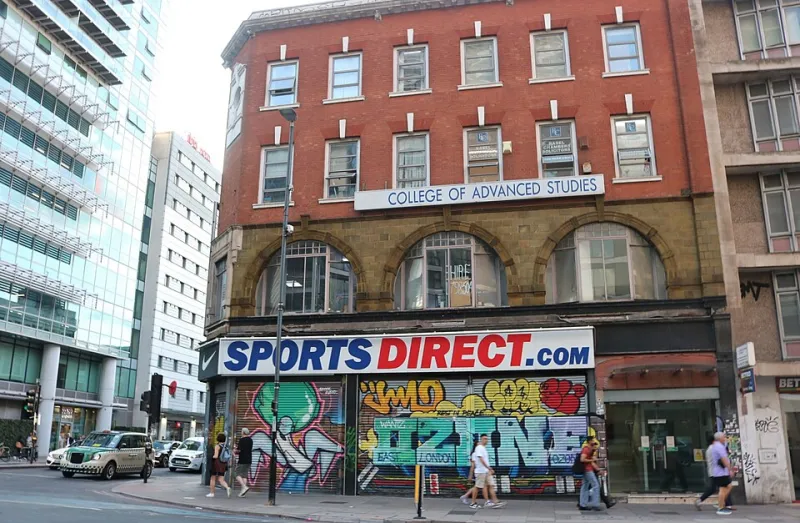
Photo: David Howard , CC BY-SA 2.0, via Wikimedia Commons
Every town centre has one now. A unit with the shutters half down, a faded sign, a hand-written notice taped inside the glass mentioning a website. If you grew up here, you know exactly which shop it used to be.
Game retail on the UK high street has been contracting for the better part of two decades — the big specialist chains have shrunk and shuttered, supermarket shelves have thinned out, and the independent shops that survived the nineties have mostly gone the way of the local record store. Nobody is pretending this is a new story. What's worth arguing about is what it actually costs us, and whether the replacement is genuinely better.
Because it isn't just nostalgia. Or rather, it isn't only nostalgia.
The High Street Used to Be a Demo Disc
Think about how you found things to play in 2006. You went into town, you looked at boxes, you read the back, you picked one up because the cover art was odd, and you put it down again. A member of staff told you it was rubbish. You bought something else entirely. You went home with a game you had no intention of buying when you left the house.
That's discovery through friction, and it's almost entirely gone. Digital storefronts are extraordinary libraries, but they're libraries arranged by an algorithm that already knows what you like. They surface more of the same. They rarely hand you a weird little thing on a shelf because a stranger liked it.
What Actually Disappears
Let's be specific, because “browsing culture” is easy to wave at without saying anything.
The second-hand economy. Trading in games kept a lot of younger players in the hobby. A tenner's worth of credit turned into a new release. For households on tight budgets, the trade-in loop was the whole system. Digital sales are cheap, but you can't sell a download back when you're done.
Gifting. A boxed game is a proper present. A code in an email is a receipt. Every December, more of us hand over something that has to be installed before it can be wrapped.
Trying before buying. Demos have made a quiet comeback, which is genuinely good news, but the old model of standing in a shop with a controller in your hand is still the fastest way to know whether a game feels right.
Price visibility. Walking past a display gave you a rough sense of what things cost. In a digital store, the price is whatever the store decides today, and the discount cycles are designed to make waiting feel risky.
The staff. People who knew things. Genuinely one of the great losses.
Digital Is Convenient — and Narrower Than It Looks
I'm not going to pretend that buying a game at half eleven at night from your sofa isn't wonderful. It is. It's cheaper, it's instant, and it's opened up the hobby to people who can't get to a shop.
But convenience isn't the same as resilience. Digital distribution concentrates an enormous amount of power in a handful of storefronts, and it's a system that can remove things you've paid for, quietly, without a going-out-of-business sale or a warning sign in the window. Ownership gets fuzzy. Storage gets tight. And with UK broadband still stubbornly patchy outside the big cities, a hundred-gigabyte download isn't neutral for everyone.
Meanwhile, the physical disc hasn't died — it's just become a premium product. Limited runs, collector's editions, print-on-demand labels. That's a lovely thing for enthusiasts and a rubbish thing for a fourteen-year-old with pocket money.
Where the Community Actually Went
Here's the hopeful bit. The social function of the old game shop didn't disappear — it relocated.
Mara Ellison, who runs a small game café in Leeds, told us the shop floor never really left her building. “We get the same conversations,” she said. “Someone asks what to play next, someone else chips in, and half an hour later there are four people playing something none of them had heard of that morning. That used to happen standing in front of a rack.”
Bea Hollis, co-owner of a console-and-coffee venue in Norwich, said the biggest surprise has been the age range. “We assumed it'd be students. It's families on Saturday mornings and retired couples on Tuesday afternoons playing puzzlers. They're not here to compete. They're here to sit somewhere that isn't their front room.”
Add in library game nights, university societies, tabletop cafés with a couple of consoles in the corner, and the small but growing number of independent retailers running pop-ups at conventions, and you've got a scrappy replacement network. It's not a high street. But it's something.
Practical Ways to Keep It Alive
None of this survives on good intentions. If you value local gaming spaces, they need your money and your feet.
- Spend small, spend often. A £4 coffee and an hour on a console is worth more to a venue than a £40 online order is to anyone local.
- Book the night out. Board game and game café evenings often need numbers to run. Turn up and drag a friend.
- Ask your library. Several UK library services lend games now. Requesting a title is a data point that justifies the shelf.
- Buy from independents when the price gap is small. You're paying a little extra for someone to still be there next year.
- Tell the staff what you want stocked. Shops that take requests tend to survive longer than shops that guess.
What Would Actually Help
A few things would move the needle beyond individual effort. Publishers could build proper retail support for small venues — demo kits, signage, early stock — instead of treating physical retail as a legacy channel. Landlords could be considerably less imaginative about business rates. And the industry could talk about access and preservation as something other than a niche concern.
But the honest answer is that the high street isn't coming back in its old form, and mourning it forever isn't a strategy. What we can do is be deliberate about where the replacement lives. The browsing culture we lost was never really about the shelves — it was about the people standing in front of them.
Go and find some. They're probably in a café with a slightly too-small telly and a very good biscuit.