Roast Dinners and Raid Nights: Why Britain's Gaming Clans Are Booking the Pub
Photo: Rodhullandemu, CC BY-SA 4.0, via Wikimedia Commons
It's ten past two on a Sunday and there are fourteen people in the back room of a pub in the Midlands, and none of them have ever met in person before. There's a carvery menu, a whiteboard with a quiz round called "Name That Loading Screen", and one bloke wearing a lanyard with his gamertag printed on it in Comic Sans.
By half three they'll be arguing about the same things they argue about on Discord, only louder and with Yorkshire puddings. By four, someone will have swapped numbers with someone they've played with for six years. It happens every month now, in rooms like this, in towns up and down the country.
From the clan to the carvery
Brits have been organising online gaming groups since before broadband. The lineage runs through bulletin boards, IRC channels, TeamSpeak servers with a teenage admin who took it far too seriously, and finally Discord — where a generation of clans has quietly become something closer to a social club with a voice channel attached.
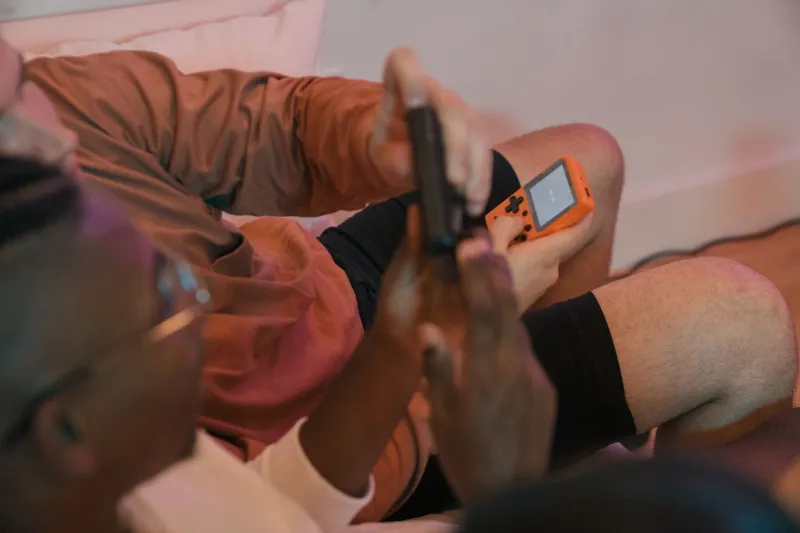
What's changed is the final step. Groups that spent years as text and headset banter are now booking physical tables. Some are modest: eight people, a quiet corner, a couple of handhelds and a pint. Others are frankly ambitious — quiz nights, raffles, charity tournaments, a projector and a fighting game bracket drawn on the back of a beermat.
"We'd been saying 'we should meet up' for about four years," says one organiser, who'd rather his group stayed nameless. "It's easy to keep saying it. One day I just booked a table for twelve and posted the address. Ten showed up. Now we've outgrown the room."
The loneliness nobody mentions
Here's the part that gets left out of the banter thread. A lot of games communities are, functionally, support networks. They're where people go when work's grim, when a relationship has ended, when the social life that used to come free with school or university quietly stops arriving.
That's not a niche problem. Loneliness among young and middle-aged men, and among people who work from home, has been a steady drumbeat in UK public health conversations for years. What's interesting is that a games clan often does the job that a club or a pub once did — not by being a formal service, but by being a place where somebody notices if you go quiet.
Doctor's appointments can't be booked for "hasn't been on since March", but a clan can. And a clan that meets in person can do something an online one can't: put a hand on a shoulder and say hello properly.
What the pub gets out of it
Sunday afternoons are not what they were for the British boozer. Wet-led pubs — the ones that live off drinks rather than food — have had a rough decade, and the quiet hours are the ones landlords feel most.
So a booking of fourteen on a Sunday, who order food, drink soft drinks all afternoon and then come back next month, is not nothing. Neither is a midweek quiz team. Pubs have always adapted to what a local needs — darts boards, pool tables, a room for the darts league — and a room for the gaming crowd is the same logic in new clothes.
It helps that gaming groups tend to be low-maintenance guests. Give them a corner with sockets, Wi-Fi that actually reaches the back room, and a landlord who doesn't make a face when a Switch comes out, and they'll be back. Some pubs have started advertising their function room for tournaments. A few have discovered that a gaming quiz pulls better on a Tuesday than a general knowledge one.
The first ten minutes are the hard bit
Ask anyone who's organised one of these what the scary part is and they'll say the same thing: the beginning.
A dozen strangers who know each other's voices intimately, and absolutely nobody knows what anyone looks like or how they take their tea. There's a moment, right before the first drink is ordered, where it could all fall flat.
What usually saves it is a shared reference. Somebody mentions a specific, terrible bug. Someone else laughs. Within ten minutes, the voice chat has caught up with the faces, and the group is functioning again — just in a different room, with better acoustics and worse snacks.
Good organisers plan for it anyway. Name badges (yes, really). A simple game that doesn't need explaining. Something to do with your hands. Anything so that the people who are naturally quiet don't spend two hours being quietly miserable in the corner.
Not everyone wants a pint
If these meetups have a weakness, it's alcohol as the default. A lot of UK social life still assumes that gathering equals drinking, and for people who don't drink — for religious reasons, health reasons, recovery, or simple preference — a pub booking can feel like a test.
It's not a hard problem to solve. Groups that do this well make the non-drinking option visible and boring, not a moral stance: soft drinks on the order, no endless rounds, no teasing. Some RGL groups run the meetup in a cafe or a community hall instead, and families with kids are welcome in a way a Saturday-night pub never allows. Several organisers we've spoken to are also deliberately shifting meetups earlier in the day for exactly this reason.
Accessibility matters too. Step-free entrances, somewhere quieter for people who find a busy room overwhelming, and a realistic sense of when the thing will actually end — because "I'll see how it goes" is a terrible plan for anyone with a train to catch or a sensory limit.
The charity angle
The other thing happening in these function rooms is fundraising. Games charities have become a natural fit for clan meetups — SpecialEffect, Safe In Our World and Get Well Gamers all have supporters inside gaming communities who already have the audience, the energy and the raffle-organising skills.
A tournament with an entry fee, a silly prize, a JustGiving page and a photo of a dozen people holding a giant cheque is now a fairly standard Sunday for some groups. It's the same instinct that built the clans in the first place: nobody wants to play alone, and nobody wants to do a good thing alone either.
Start your own, then
The recipe is almost embarrassingly dull. Pick a pub with a back room and a decent Sunday menu. Book for fewer people than you expect. Post the address in the server and say it plainly. Print the name badges. Bring one game that anyone can play and one that only the regulars will. Take a group photo. Do it again next month.
What you get out of it isn't a raid group with better chairs. It's the absurd, oddly moving experience of hearing somebody's real laugh for the first time, six years after you first heard their voice.
If you've already got one going — or you're quietly thinking about being the one who books the table — tell us in the comments. We're collecting the good ones.