Boxes Under the Eaves: The Bedroom Archivists Rescuing Britain’s Old Games
Every British game collection has a ladder story. Someone remembers a box going up into the loft “for now” sometime around 2004. Someone else remembers the shed being “dry enough, probably.” Then a decade passes, the roof leaks, the temperature swings from sauna to fridge, and a perfectly ordinary cardboard box turns into an accidental archaeology project.
That is the strange race happening across the UK right now. It is not a race with cameras or funding announcements. It is a race of people climbing into lofts with a torch, finding a bin bag full of PlayStation discs, and asking a very reasonable question: is this still any good?
Sometimes the answer is yes. Sometimes it is a sad little click, a smell of old cardboard, and a cartridge battery that has quietly been leaking since the first Tony Blair government.
The loft is a terrible vault
We treat lofts like storage. In practice, they are weather systems. British lofts get blazing hot in July, freezing in January, and damp whenever the rain decides to have a go at the felt. Condensation does the rest. Sheds are worse. Garages are often just a shed with a car in it.
For games, that is a miserable combination. Discs can suffer from disc rot, where the reflective layer starts to fail and the data becomes unreadable. Cartridge batteries — especially in older Game Boy, Mega Drive and PC Engine titles — leak and corrode the board. Cardboard sleeves go soft. Manuals fuse together. Labels lift. Tapes for old home computers can develop mould, and nobody wants to find out what a damp Amiga disk smells like.
And yet the loft remains the default British archive. It is where childhoods go when bedrooms are redecorated. It is where the “maybe one day” box lives.
What players are actually finding
The stories coming out of UK collector groups tend to follow the same shape. Someone inherits a box. Someone finally clears out the spare room. Someone buys a job lot from a house clearance and finds a console wrapped in a tea towel. The collection is rarely pristine. It is usually dusty, slightly damp, and weirdly emotional.
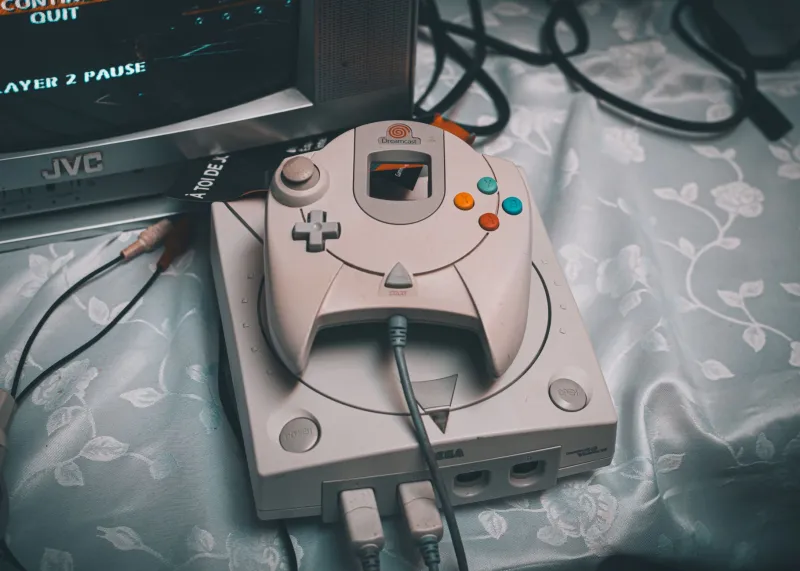
One Norwich player found a Dreamcast and a handful of games that had been sitting under a leaking water tank. The console was beyond saving, but the discs cleaned up and the memory card still held a save file from a summer holiday. Another collector in Yorkshire opened a Game Boy to find the battery had gone off like a tiny chemistry experiment. The shell was stained. The board was salvageable. The save was gone.
That is the bittersweet part. The games themselves can often be preserved. The saves are another matter. A memory card is a diary with a plastic case. Losing it feels different from losing a disc.
The rescue kit that actually helps
You do not need a lab coat. You do need to be a bit boring and careful.
Start by getting the collection out of the loft or shed and into a room with stable temperature and low humidity. A spare bedroom, a hallway cupboard, even a dry living-room corner is better than a loft. Do not put boxes against an outside wall. Do not store them on the floor. Do not stack heavy things on top of them.
Check cartridge batteries sooner rather than later. If you are not comfortable opening a cartridge, find someone local who is. UK repair cafés, retro groups and high-street repair shops are increasingly comfortable with old consoles, and there are plenty of patient hobbyists who will replace a battery for a few quid or a cup of tea. If a battery has already leaked, isolate that cartridge and clean carefully. Do not scrub at corrosion with anything abrasive.
For discs, keep them vertical, in cases, away from radiators. Clean from the centre outwards with a microfibre cloth. Avoid the old toothpaste and peanut-butter tricks you see online. Avoid tape repairs. Avoid stacking discs loose in a CD wallet where they can pick up grit.
For old computers and tapes, do not power up anything with a suspicious power supply just to “see if it works.” Get it checked. And for everything — discs, carts, manuals, boxes — photograph it, note what you have, and back up saves where possible. A spreadsheet is not glamorous, but neither is finding out in 2036 that you had a rare PAL release and no idea.
Bedrooms versus institutions
Here is the uncomfortable question. Are ordinary bedrooms and spare-room cupboards doing more for UK game preservation than institutions?
In some ways, yes. Bedroom archivists are fast. They rescue things from house clearances. They know what a fair price looks like. They document variants, share repair knowledge, and keep games playable rather than just shelved. They are emotionally invested in the stuff. That matters.
Institutions have the opposite strengths. They have controlled storage, catalogues, legal frameworks and long-term plans. They can keep something safe for a century. But they cannot save everything, and they are not always set up to accept a carrier bag of dusty Mega Drive carts from a stranger. The National Videogame Museum in Sheffield and various local museum collections do important work, but they are not the whole picture.
The honest answer is that both sides need each other. The bedroom archivist saves the thing. The institution gives it a future. The gap in between is where UK players are doing a lot of unpaid, unglamorous work.
Start with the box you keep ignoring
If there is a box in your loft with a console cable poking out of it, this is your nudge. Bring it down. Open it somewhere dry. Sort the obvious rubbish from the maybe-saveable. Check for leaking batteries. Photograph what you have. Ask for help if you need it.
Preservation sounds like a big word. Most of the time it is a small action: a battery changed, a disc cleaned, a save file copied, a box moved out of the damp. Britain’s gaming history is not just in museums. It is under the eaves, in the spare room, and in the hands of players who remembered to climb the ladder.