The Previous Owner Is Still in the Save File

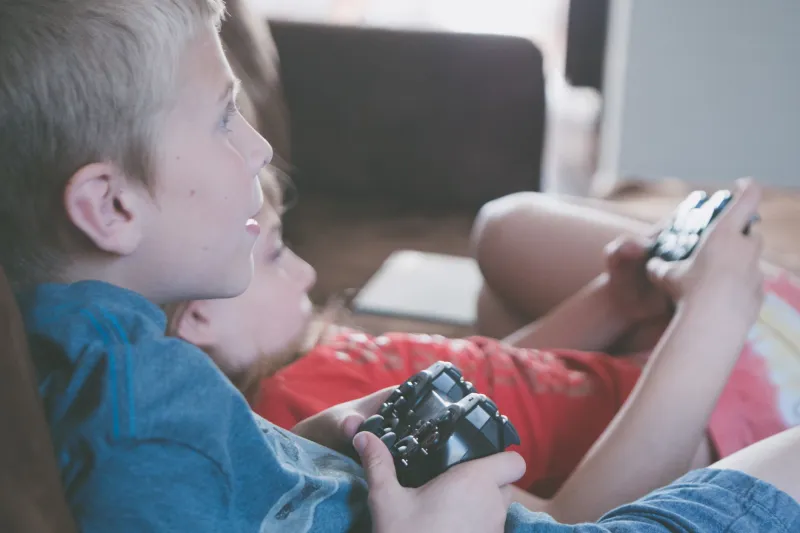
Photo by Photo by Jiamin Huang on Unsplash on Unsplash
There is a specific kind of silence that fills a room when a second-hand cartridge boots up and the menu says Continue instead of New Game. You did not make that save. You do not know the person who did. But there it is: a team of Pokémon at level 100, a FIFA career sitting in March of some forgotten season, an Animal Crossing town with flowers arranged in neat little rows and a mortgage that has clearly been ignored since roughly the last World Cup.
I found my first ghost in a charity shop in Stockport. A copy of Pokémon Emerald, five pounds, sticker on the label. I got it home, slid it into my DS, and found a trainer called JORDAN with 214 hours on the clock. His team was immaculate. His boxes were chaos. He had caught a Feebas, which felt like finding a winning lottery ticket inside a library book.
I did not delete it. I am not sure I could have.
The cartridge as somebody else's loft
Pre-owned games have always carried a certain smell — faintly plastic, faintly someone else's house — but saves are different. A save file is not wear and tear. It is a fingerprint. It is the exact shape of somebody's rainy Saturday afternoons, their commutes, their procrastinated coursework, their determined attempt to finally win the league with Norwich City.
British players have a long and slightly awkward relationship with this. We trade in at CeX. We rummage at car boots in the drizzle. We buy from charity shops where the games are stacked next to Jeffrey Archer paperbacks and a single unexplained remote control. The result is that our shelves are full of other people's unfinished business.
And we notice it. We notice that the previous owner named their character after themselves, then spelled it wrong. We notice that they got stuck on the same boss we got stuck on. We notice that their Animal Crossing house has no furniture in the upstairs room, which feels less like laziness and more like a cry for help.
The strange guilt of pressing New Game
There is no official etiquette here. No loading screen tells you what to do. But ask around any British gaming group and you will find the same quiet rules emerging.
Rule one: if the save is under an hour old, it is fair game. That is not a ghost, that is a demo. Rule two: if the save has a name attached — a proper name, not 'AAA' or 'Player 1' — you hesitate. Rule three: if the game has a Continue option and the previous owner was further than you have ever managed, you leave it alone and start your own file in slot two. It is not respect, exactly. It is superstition. It is the feeling that deleting someone's 200-hour Pokémon team might be bad luck, like moving a magpie's nest.
FIFA careers are the most common ghost. A half-finished season is a very British artefact: a promise made in September, abandoned by February, never formally cancelled. Animal Crossing towns are the most emotional. You load in and find a town called 'Home' with a player character who has not logged on since 2019. The villagers are still there. They still say nice things. The mortgage is still unpaid. It is like finding a diary where someone stopped mid-sentence.
What the leftovers actually tell us
Here is the thing about second-hand saves: they are a better record of how Britain actually plays games than any sales chart. They show us the games people bought on a whim because they were cheap. They show us the games people stuck with for months because they had nothing else on. They show us the FIFA careers that were abandoned not out of boredom but because real football started again, or because the disc got scratched, or because life got in the way.
They also show us that most players do not finish things. That is not a scandal. It is just true. The save file of a stranger is a reminder that the vast majority of gaming is ordinary, interrupted and deeply personal. It is not a list of achievements. It is a mess of half-done things that somebody cared about for a while.
And there is a strange comfort in that. When you load up someone else's save, you are not inheriting a masterpiece. You are inheriting a Tuesday night. You are inheriting a teenager who saved up for a game and then had to sell it. You are inheriting a parent who bought it for a child who moved out. You are inheriting the exact moment someone put the controller down and never picked it up again.
The quiet etiquette of the inherited save
So what do we do with them? The emerging answer, at least among the players I have spoken to, is: keep them. Not forever, necessarily. But long enough to acknowledge them. Some people copy the save to a memory card and then start fresh. Some people play the old save for an hour, just to see what it feels like to be somebody else. Some people refuse to touch it and buy a second copy instead, which is not efficient but is very British.
The etiquette is not about preservation. It is about not being the person who erases someone else's afternoon. It is a small kindness, offered to a stranger who will never know. And in a hobby that is increasingly built around cloud saves and permanent accounts, there is something lovely about the fact that a cartridge from a car boot can still hold a ghost.
Next time you buy a pre-owned game, check the save slots before you start. You might find a level 100 team. You might find a half-finished season. You might find a town called Home. Leave it there. Add your own file next to it. The cartridge can hold more than one person's Tuesday.