Second Pad, First Mate: The Quiet Power of Britain's Backseat Gamers

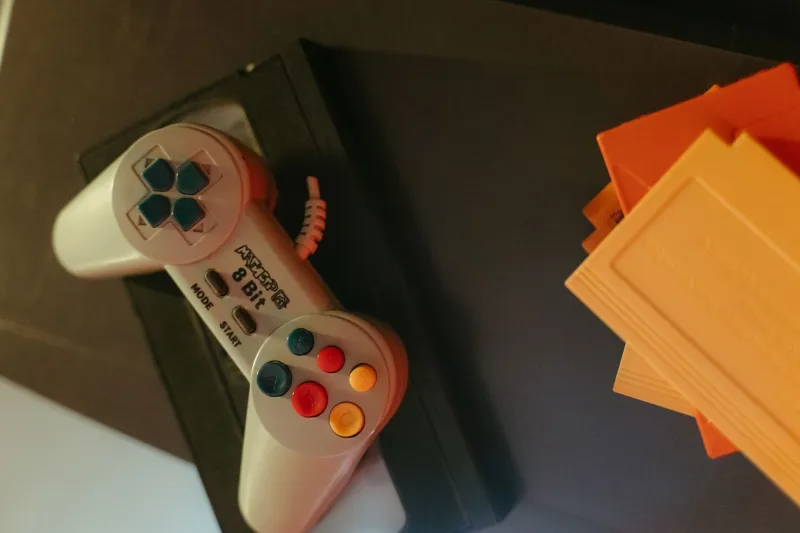
Photo by Photo by Vitaly Gariev on Unsplash on Unsplash
It is a grey Sunday afternoon in a terraced house somewhere in Leeds. The rain is doing that thing where it cannot commit to being weather. On the telly, a player is three attempts deep into a boss fight, palms sweaty, jaw set. On the sofa, someone else is curled under a blanket with a notebook, a pen, and the calm authority of a air traffic controller. They are not playing. They are, unmistakably, part of the playthrough.
This is the backseat gamer: the partner, flatmate, sibling or parent who never touches the pad but somehow ends up knowing the map better than the person holding it. They are the ones who remember that the key was in the drawer two rooms back, who spot the glint of a collectible off-screen, who call out 'left, left, LEFT' during a chase sequence with the urgency of a coxswain. In British living rooms, where space is tight and sofas are shared, they have become an unofficial co-op mode — and honestly, the game is better for it.
The Passenger Who Knows the Map
Backseat gaming is not a new invention. Siblings have been narrating each other's runs since the Mega Drive days, and the tradition of two people crowding around one screen is as old as the console itself. What feels different now is how deliberate it has become. Games are denser, longer and more demanding of memory. Open worlds ask you to hold a dozen questlines in your head. Puzzle games hide solutions in plain sight. Horror games, meanwhile, are objectively more fun with a second person in the room to yelp on your behalf.
So the backseat gamer has evolved. They are not just watching. They are archiving. Handwritten maps with biro arrows. Colour-coded tabs in a notebook. A phone note titled 'THINGS WE MUST NOT FORGET' that is somehow both chaotic and indispensable. One player I know keeps a running list of every NPC who has been rude to her partner, so they can be judged accordingly later. That is not passive. That is editorial.
Why Single-Player Became a Two-Person Job
There are practical reasons for the rise of the sofa co-pilot. Money is one. A sixty-quid game is easier to justify when two people get something out of it, even if only one is pressing buttons. Space is another. Not every household has room for a second setup, and not every couple wants to disappear into separate rooms for an evening. The shared screen — or shared sofa — is a way of being together without needing to split the telly in half.
There is also the simple fact that watching games has become normal. Streaming culture has taught us that observation is its own pleasure. A good backseat gamer is not a frustrated player who has been denied the pad. They are a connoisseur of the run: the tension, the near-misses, the awful decisions, the glorious recoveries. They get the story beats without the sweaty palms. It is, frankly, a brilliant deal.
The Etiquette Is Unwritten but Strict
Every backseat gamer operates under a code, and every player has their own tolerance for commentary. The good ones know the difference between helpful and mutinous. 'Have you tried the other door?' is fine. Grabbing the pad is not. Reading ahead in a walkthrough without permission is a diplomatic incident. Spoiling a death before it happens is grounds for a tea-based sanction.
There is a rhythm to it. The backseat gamer learns when to speak and when to shut up during a cutscene. They know that the phrase 'is that a puzzle?' should be deployed carefully, because it usually means the player has been staring at the same wall for four minutes. They understand that a tactical tea break is not an admission of defeat; it is a strategy. Some of the best boss fights in British homes have been won in the kitchen, while the kettle boils and someone says, 'What if you tried rolling instead of panicking?'
The Quiet Craft of the Second Chair
The best backseat gamers are not just hecklers with a good view. They are lore keepers, morale officers, and occasional cartographers, they remember which NPC gave you that cryptic hint three hours ago. They notice that the music has changed and something is about to happen. They are the ones who say, 'You've got this,' when it is objectively not true, and somehow that helps. They are also the ones who remember the playthrough fondly afterwards, sometimes more fondly than the person who actually did the hard work. There is a particular pride in saying 'we finished it' about a game you never held a controller for.
A Ritual Worth Making Room For
Backseat gaming is not a nuisance to be tolerated. It is a social mode — a way of sharing a story that was designed for one but is quietly better with two. It turns a solo campaign into a running conversation, a shared history of inside jokes and near-disasters. It gives the person on the sofa a stake in the outcome without demanding they learn the parry timing.
So if you are the one with the pad this winter, pass the notebook. Ask for a second opinion. Let someone else call out the collectible you have walked past twice. The best co-op mode in Britain might not have a menu option at all — it might just be the person next to you, who has been paying attention the whole time.