The Room Off the Corridor: Britain’s School Gaming Clubs Are Quietly Building a Different Kind of Team
Photo: jeff collins, CC BY-SA 2.0, via Wikimedia Commons
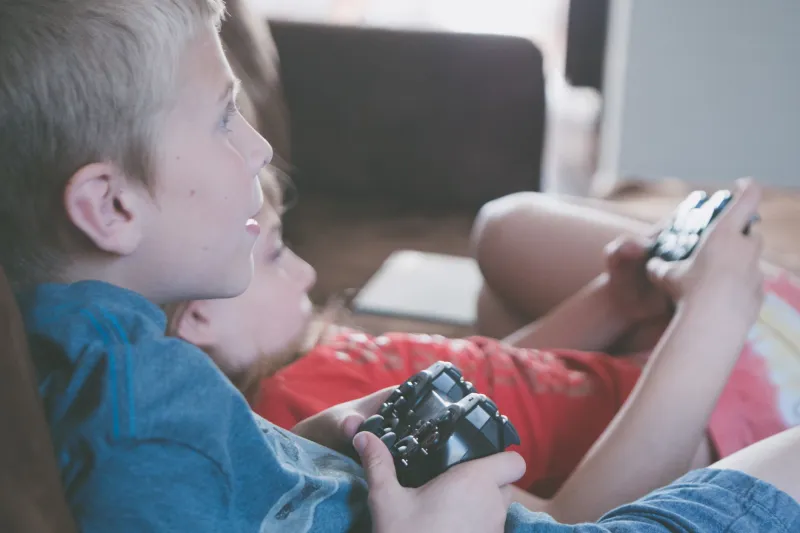
It is 12:35 on a Tuesday and the dinner hall is doing what dinner halls do: trays clattering, Year 8s shouting across tables, a tannoy announcement nobody can quite hear. Down the corridor, past the noticeboard and the fire exit, a smaller room has been turned into something else entirely. There is a trolley of controllers, a stack of ageing laptops, a projector that needs a firm hand, and a group of kids who have chosen to spend their lunch break taking turns on a save file they have been building since September.
This is the school gaming club. Not a headline-grabbing esports academy, not a shiny after-school programme with branded hoodies. Just a room, some kit, and a few adults who have worked out that not every child wants to spend their free time chasing a ball.
The trolley by the fire exit
The people running these clubs are rarely dedicated gaming staff. More often they are teachers, teaching assistants or parent volunteers who already have a full day and have agreed to give up part of it. They know the difference between a Nintendo Switch and a switch statement. They know which Year 6 pupil needs to be asked, gently, to hand over the controller. They know that the child who says nothing for the first three weeks will eventually ask to join in.
The kit is usually a patchwork. A donated console here, a parent’s old laptop there, maybe a school licence for Minecraft Education that someone has been carefully protecting since the last training day. Controllers have missing battery covers. Headsets are kept in a plastic box because someone once sat on them. It is not glamorous, but it works.
Why the pitch isn’t the only place to belong
The easy version of this story is that gaming clubs are for kids who do not like sport. That is true for some of them, but it is not the whole picture. These rooms also fill up with children who find the dinner hall overwhelming, pupils who are new to the school, kids who have caring responsibilities at home, and students who simply prefer a quieter sort of teamwork.
A football pitch tells you very quickly whether you are fast enough or strong enough. A gaming club asks different questions. Can you wait your turn? Can you explain a rule to someone else? Can you lose a round and still be in the room five minutes later? Those are social skills, and they matter.
Staff at schools running these clubs often say the same thing: the benefit is not really the game. It is the conversation around it. It is the pupil who normally eats alone finding a table. It is the older child helping a younger one set up a save. It is the parent volunteer who is not a teacher getting a nod in the corridor. In a school day that can feel tightly timetabled, that small room gives everyone a bit of room.
The kit is older than the kids
Practical hurdles arrive fast. Consoles need updating. Laptops need charging. Accounts need managing. A game that worked last term may suddenly require a password nobody wrote down. Minecraft Education is a popular choice because it can be run on modest hardware and fits neatly into a school setting, but it still needs someone to set it up and keep it running.
Funding is the other constant. A new controller costs money. So does a replacement charger, a licence, or a decent set of headphones. Many clubs survive on PTA contributions, donated equipment, pre-owned bargains from local game shops and the occasional small grant. Some ask parents for a voluntary contribution towards snacks or repairs, though that has to be handled carefully so no child is left out.
The good news is that the barrier to entry can be lower than people think. You do not need the latest console generation. You do not need a row of identical screens. A mix of older hardware and one or two reliable machines is often enough to get going, provided the games are age-appropriate and the session is structured.
Safeguarding is the boring bit that makes it work
No one runs a school gaming club for very long without getting to know the safeguarding lead. That is not a reason to avoid starting one. It is the reason these clubs can exist at all. A clear plan, agreed with the designated safeguarding lead, makes the difference between a chaotic room and a calm one.
That usually means DBS-checked adults, sensible staff-to-pupil ratios, parental consent, and a written agreement about what is and is not allowed. Online features need particular care. If a game has chat, it should be switched off or tightly monitored. Screens should be visible. Age ratings should be respected. Photo permissions should be checked before anyone takes a picture for the school newsletter.
It also helps to have simple rules that the pupils help write. No private chats. No swapping accounts. No grabbing controllers. Time limits on popular games so everyone gets a go. The rules do not need to be long. They need to be consistent, and they need to be visible on the wall.
A starter guide for the brave
If you are thinking about setting up a club in your own school, start small and start boring. Talk to the safeguarding lead first. Ask what the school already has in storage. Find out whether the IT team can support the machines you are planning to use. Then build outwards.
- Decide who the club is for and how many pupils you can realistically manage.
- Ask for donations through the school newsletter and local community groups.
- Keep the first sessions short and low-stakes.
- Choose games with clear age ratings and offline modes where possible.
- Write a one-page rules sheet with the pupils, not just for them.
- Have a plan for pupils who do not want to play but still want to be there.
- Keep a simple inventory of kit, chargers and cables.
- Ask the kids what they want to play next term, then check it is suitable.
One final piece of advice from people who have done it: do not promise Fortnite. Promise a room, a few controllers and a fair go. The rest tends to follow.
The last bell
At 13:15 the trolley is wheeled back into the cupboard, the laptops are shut, and the room returns to being a room. The pupils go back into the corridor and the noise of the school day. For an hour a week, though, that little space off the corridor has done something useful. It has given a group of kids a team that does not require muddy boots, a place to be quiet without being alone, and an adult who is simply glad they turned up.
That is worth a few missing battery covers.