The Hum Behind the Door: The Brits Running Game Worlds From Their Spare Rooms
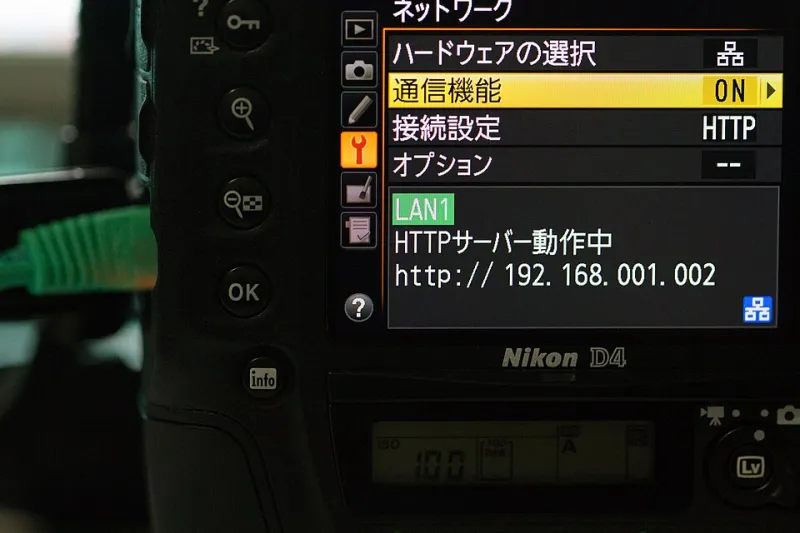
Photo: Takashi Hososhima from Tokyo, Japan, CC BY-SA 2.0, via Wikimedia Commons
There is a sound that lives in a certain kind of British spare room. It isn't loud. It sits somewhere between a fridge and a distant A-road, a low and entirely unremarkable hum, and it belongs to a computer that nobody is currently using. It shares a desk with a box of Christmas decorations, a bicycle pump and a stacking chair that hasn't been sat on since 2019. And it is, quietly and stubbornly, running a world.
You've probably met the person who owns it. They're the one in the group chat who says "give me five, I'll get it up" and actually does.
The box room with the blinking light
Walk into enough of these rooms and the setups start to rhyme. The hardware is almost never glamorous. It's an ex-office Dell OptiPlex that came from a school surplus sale for sixty quid, or a tower built from three dead PCs and one good graphics card, or — increasingly — a Raspberry Pi taped to the underside of a shelf because the shelf was there and the tape was there.
The operating systems are a similar story: Ubuntu Server, a Docker stack, a Home Assistant box that got promoted beyond its station, and a text file on the desktop called NOTES THAT MATTER which is, in fact, the only documentation for a world that four people have been building on since March.
What's striking is the pride. Ask a home host about their setup and you'll get a tour — not of the hardware, but of the decisions. Why that drive. Why that backup schedule. Why the server sleeps at half eleven and wakes at seven. It's the same energy as someone showing you their allotment. Nothing flash, everything tended.
Upload speed is the new rent
For years the British reality of self-hosting was brutally simple: our broadband was built to deliver, not to send. Whatever your headline download number said, the upload side of an old copper line could barely manage a video call, let alone a dozen players spread across three time zones.
That's shifting. Full fibre — both the Openreach build and the various altnets chewing up pavements in towns that had been politely ignored — has put proper symmetric speeds into streets that spent a decade squinting at rollout maps. Six mates on a Valheim server barely trouble a decent connection. A Minecraft world with twenty kids from a school Discord is a different beast entirely, and the hosts know it: chunk loading, view distance, and the small matter of somebody's dad streaming 4K in the next room.
So checking your postcode against a fibre map has become a low-key British hobby, right up there with complaining about bin collections. "I'm getting 900 up in April" is the new "I've finally got a driveway."
The landlord's etiquette
Here's the part nobody writes down: running a server makes you the landlord of a very small, very strange village.
There are rules, mostly unwritten. You do not reboot during raid night. You give notice before maintenance. You post "going down for ten, back in a bit" and collect your thumbs-up like a vicar after a decent sermon. You are the person who has to have the awkward conversation about the friend-of-a-friend who keeps "accidentally" filling the base with lava.
Whitelisting is diplomacy. Somebody's partner wants in. Somebody's teenager wants in but not with their mates. There are group chats within group chats, and the host is usually in all of them, holding a small and unglamorous kind of authority. It's less sysadmin, more parish council.
When the fan noise becomes the soundtrack
Then there's the money. A tower pulling 70 watts around the clock isn't a fortune, but at a price cap hovering near 25p a kilowatt-hour it's the sort of figure that turns up in a household budget conversation, somewhere between the broadband and the boiler service.
Hence the tinkering. Undervolting. Old laptops pressed into service. Servers that hibernate overnight so the group learns to play in windows — actual office hours, agreed in advance, which has done wonders for nobody's sleep but everyone's scheduling.
And then there's the noise. A spare-room server is a presence. It's the thing you hear at 2am when the house is otherwise silent, and after a while you stop noticing it, the way you stop noticing a clock. Guests notice. "What's that humming?" they ask. "That's the world," you say, and they look at you a bit strangely, and you move on.
Backups, or the two-in-the-morning insurance policy
Every host has a story. The corrupted save. The drive that clicked. The evening a group of grown adults sat in a Discord call in total silence while someone ran a recovery tool and everybody privately rehearsed the apology they were going to make.
The good hosts now keep a drive in a drawer and a copy on a cheap cloud tier and a third one on a USB stick that lives in a coat pocket, which is the 3-2-1 rule as practised by somebody with one drawer and a lot of optimism. Nobody enjoys the backup routine. Everybody who's lost a world swears by it afterwards.
Why rented never quite feels like home
None of this is efficient. You can rent a game server for the price of a couple of pints, spin it up in ninety seconds, and never think about a fan or a firmware update again. Plenty of people do exactly that, and fair play to them.
But a rented server has no one behind it. When it falls over, you file a ticket. When your home-hosted world falls over, a mate texts you a photo of a router with a red light and you both laugh about it. The rented one is an address. The home one is a place, with a person who cares whether the door's open.
There's something else, too. A home server is small on purpose. It has a whitelist, a name in the loading screen, an MOTD that's usually an in-joke. It isn't trying to be a platform. It's trying to be Tuesday night.
A small world, kept on purpose
So next time the group chat lights up with "server's up", spare a thought for the box room it's coming from. The hum behind the door. The kettle going on next to it. The person who spent their Saturday reinstalling something so that six other people could spend their evening putting a roof on a shack.
It's not a data centre. It's a cupboard. And right now, it's the best-run little world in Britain.